Hi quest ,  welcome  |  sign in  |  registered now  |  need help ?

IHSG Entering Rally Period: The decline in interest rate - Supports Economic Growth

Written By Unknown on Monday, March 7, 2016 | 2:11:00 PM

The government decided to further lower its benchmark interest rate by 25 bps (18/02) due to a stable exchange rate and low inflation rate in January last 4:14%. These government measures can be said to be appropriate because it could bolster economic growth towards the higher, in addition to the acceleration in government spending related to infrastructure, improvement of the purchasing power of consumers will also have a positive impact on the Indonesian economy.
The interest rate Indonesia at this time is quite high, when compared with countries in Asia and Europe, at a time when countries like the US, Japan and Europe apply a low interest rate, Indonesia is still hindered by high interest rates, one thing making monetary authorities are reluctant to lower interest rates in China's economic slowdown is pushing the country to weaken the Yuan in order to withstand the decline in the value of exports. Pressure on the rupiah will make the risk of increased debt and lower investment rating Indonesia.
Indonesia's economic growth in the fourth quarter showed an improvement compared to the previous quarter which reached 5:04%, for the full year 2015 Indonesia's GDP grew 4.79% slightly better than the market consensus of 4.75%. Indonesia's economic recovery make foreign funds back into the domestic stock market and money market instruments (bonds). Up (18/02) YTD foreign net buy reached Rp 2.74 trillion, making JCI is currently in phase II (my writing at the beginning of last year), the target towards 5,000.
Until FEB-16, JCI quite shiny, it can be seen in the graph below yields, even surpass the performance of JCI famous stock exchanges, such as the US, Japan, Hong Kong and Europe.
The positive sentiment in the country in the improvement of economic direction, acceleration of infrastructure budgets, tariff reduction in fuel, electricity and interest rates is an important instrument to support the strengthening of the stock market until the second quarter of this year. JCI currently is entering phase II (4.700 to 5.000) 4.700 I see the point of support is also strong enough to date technically.
JCI Technical View
jci-technical-view


JCI's performance up to now quite positive, sometimes there is a correction, but the level of support at 4,700 is not broken, it's been 2 weeks JCI bullish trend, it is inversely proportional to the majority of stock markets globally and regionally, I believe the economic recovery will be felt in this year, if the government can keep the economy is not likely stability economic growth back above 5%, but remain aware of the risk of the global economy as oil prices are still volatile and interest rate policy of the Fed, for the weekly performance of JCI deserves a rating of B +.
2:11:00 PM | 0 Comments
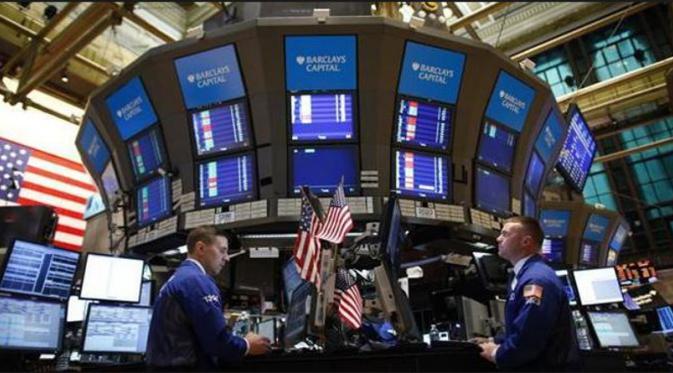
US Labor Data Lift Wall Street

American Stock Exchange (US) continue to strengthen ahead of this weekend after labor data reduce investor fears of a sluggish economy.

For the first time since early January, the Dow Jones stock index rose above 17,000. It shows the market participants see a number of significant psychological level.
In addition, the US stock market rally also followed data non-agricultural employment increased 242 thousand in February 2016. However, inflation is becoming a key factor in the central bank's decision the United States (US) or the Federal Reserve to raise US interest rates.
"These figures show the economy is strong, and the Federal Reserve have time, do not have to run in a hurry to raise interest rates," said John Brady, director of RJ O'Brien & Associates as quoted from Reuters on Saturday (05/03/2016 ).
The Federal Reserve will meet on March 15 to 16, 2016. The market saw no chance of surviving in interest rates in March.
At the close of trading on Friday (Saturday morning GMT), the Dow Jones stock index rose 62.59 points, or 0.37 percent to 17006.49. Followed stock index S & P 500 added 6.49 points or 0.33 percent at 1999.89. Nasdaq stock index rose 9.6 points or 0.2 percent at 4717.02.
There are also eight stocks sector rose from 10 sectors of the stock in the stock index S & P 500. Strengthening stock sectors led by energy stocks sector rose 1.14 percent. Apple shares rose 1.38 percent, and a positive sentiment for the stock index S & P 500.

Shares of Hewlett Packard Enterprise surged 14.33 percent after the company reported better-than-expected results. Broadcom shares rose 6.75 per cent which also has released performance.
12:14:00 PM | 0 Comments

Knowing Types Of Stocks: Common Stocks and Preferred Stocks

Written By Unknown on Monday, February 29, 2016 | 11:32:00 AM

After learning about the notion of stock, now we will discuss about the types of stocks. Apparently not all of the same stock. There are two types of shares, namely Common Stock and Preferred Stock. Any difference between the two types of shares? Read this article further.
Commonly known to the public stock is common stock, but there are actually two types of shares, namely:
COMMON STOCK
Ordinary shares are shares that put the most recent owner of the distribution of dividends and rights to assets of the company if it liquidated. This is due to the common stock owners do not have special privileges. The owners of ordinary shares will not obtain payment of dividends during the company does not earn a profit. Each shareholder has voting rights in the general meeting of shareholders / GMS with the provisions of one share one vote. Holders of ordinary shares have limited responsibilities to the claims of other parties for the proportion of shares and have the right to transfer its ownership to another person.

PREFERRED STOCK
Preferred stocks are stocks that have the characteristics of a combination of bonds and common stock, because it can generate a fixed income (such as interest on bonds). This is due to get the right distribution of dividends regularly. There are three characteristics of preferred stock that make it similar to bonds: no claim on earnings and assets previously, dividends remain for the duration of the shares, and has the right to redeem and can be exchanged for common shares.
Read Also What is IPO?
The advantages of preferred stock is safer than common shares. Because the preferred shares have the right to claim against the company's assets and the distribution of dividends in advance, however the preferred stock has a weakness that is difficult for bought and sold like common stock, because the numbers are small.

How to Differentiate Common Shares and Preferred Shares

In the Indonesia Stock Exchange, is easy to differentiate between Common Shares and Preferred Shares. The trick view stock code. Stock code is always comprises four letters. If there is an additional one letter P means that the shares are Preferred Stock.
11:32:00 AM | 0 Comments

What Is IPO?

Learning Investment - In various media, of course you often hear about an IPO or Initial Public Offering. Actually, what the terms of the IPO in the stock market? What is its purpose? All will be answered in this article.
Definition of IPO (Initial Public Offering)
In the Indonesian language, referred to as the IPO Initial Public Offering. Thus the IPO is a company's stock is first released to be offered or sold to the public / public. Therefore, companies that did IPOs often called being "GO PUBLIC".
Interest IPO
Why would a company want to take off or sell its shares to the public / community? There are a variety of reasons companies do IPOs, which are:
1. Get a low-cost funds. Companies can obtain funds from various sources such as issuing bonds, borrowing money from banks. But both methods have an obligation, that pay interest. Meanwhile, if the company off the stock to receive funds, the company is not burdened with interest.
2. The financial performance of the company better. By getting the funding cost, the company could pay the debt and improve its financial reports quickly.
3. The potential for faster growth. Companies could use the funds internat for expansion, for example, to open a branch. But if it has a low cost funding, could expand more quickly and in the long term potential of the company's growth could be even greater.
4. Improving the image of the company. The public company will always be highlighted media. When able to be managed well, the media spotlight could be an indirect marketing tool for the company.
5. Increase the value of the company as a whole. By going public, the company's value is much likely to rise in future due to higher stock prices. If the company is perceived to have a good performance by investors, the stock has also increased opportunities for advancement.
Generally, shares released to the public only a fraction of the total number of shares of the company. For example PT A shares to the public release of 10% of the total shares. Number of shares released to the public is 1 million pieces. Initial share price of Rp 10,000 per share. Then the overall value of the company is: (100/10) x share price x number of shares = (100/10) x Rp 10,000 x 1,000,000 = 100 billion

For example, the stock price after the IPO increased to Rp 20,000. Then the overall value of the company now is: (100/10) x share price x number of shares = (100/10) x Rp 20,000 x 1,000,000 = 200 billion. So the increase in the company's stock price after the IPO, will also enhance the company's overall value.
11:23:00 AM | 0 Comments

Go Public Processing

Learning Investment - Go Public or often called the Public Offering is offering activities undertaken by the company to the public (public). By offering shares to the public, then the company will be listed on the stock exchange becomes a public company / open.
There are several processes that must be passed by the company to go public, among others:
1. Preparation
This stage is the initial stage in order to prepare everything related to the process of going public. At the earliest stage, companies need to conduct the General Meeting of Shareholders (AGM) for approval of the shareholders in order to go public. After the approval, the company subsequently appoint underwriters and other agencies to help the process of going public.
• Underwriter (Lead Underwriter). Is the most involvement in helping the company in order to issue shares. Activities undertaken underwriters include: preparing various documents, helped prepare the prospectus, and to guarantee the issuance of shares of the company.
• Public Accountant (Independent Auditor). Assigned to conduct an audit or examination of the company's financial statements.
• Assessors to assess the company's fixed assets and determining the fair value of fixed assets.
• Legal Counsel to give a legal opinion (legal opinion).
• Notary to make the deeds of amendment, deed of agreements in the framework of the public offering and the minutes-meeting minutes.
2. Stage Filing of Registration Statement
At this stage, companies submit an application to the relevant institutions (the Financial Services Authority or FSA)
3. Stage Stock Quotes
This stage is the main stage, because at this time the issuer offered shares to the public (public offering or IPO in the primary market). Investors can buy shares through agents designated sellers. Keep in mind also that not all desires are met investors in buying shares of companies that will go public. For example, shares released to the primary market of 100 million shares while investors who want to buy the entire amount to 500 million shares. Then there are oversubscribed (oversubscribed). To be fair it is usually done allotment (allotment).
4. Phase Recording Stock Exchange

After the completion of the sale of shares in the primary market, then these shares were listed on the Indonesia Stock Exchange. Investors who did not get on the primary market, can be purchased on the secondary market in the Indonesia Stock Exchange.
11:16:00 AM | 0 Comments

Reguler Market, Negotiation Market and Cash Market In Stock Exchange

Learning Investment - The secondary market is a continuation of the primary market after the company's release of its shares in an IPO. Once listed on the stock exchange, which means that the company's shares can be freely traded by the public, according to the number of supply and demand. Buying and selling shares in the secondary market was held at the Indonesian Stock Exchange. You can buy shares through a securities broker or, for example, using software online stock trading. Now, the secondary market is divided into three, namely the Regular Market and Cash Market Negotiation.
• Regular Market. Shares in the Regular Market traded in the trading unit "lot", where 1 lot now is 100 sheets. Stock transaction bargaining mechanisms which take place continuously during the trading period. So, arguably the stock price could change continuously every time.
• Negotiated Market. Almost similar to the way trading on the regular market, no bargaining as well but did not do in the stock exchange market. Price bargaining is conducted privately, but remains under the supervision of the exchange. Market negotiations usually chosen when the number of shares the investor does not even 1 lot (100 shares). The results of the negotiations to be agreed by the exchange.

• Cash Market. Exactly the same as on the regular market, which differ only payment system. On the regular market transaction settlement is T + 3 (three days after the transaction), the payment system in the cash market T + 0 be done the same day. Cash Market are available to complete failure of the Exchange members to fulfill their obligations in the Regular Market and Negotiated Market. For example on short selling transactions.
10:38:00 AM | 0 Comments

Blog Archives